
Create dynamic QR codes with real-time analytics. No credit card required.
Start for Free →Digital product identification is becoming an integral part of global trade.
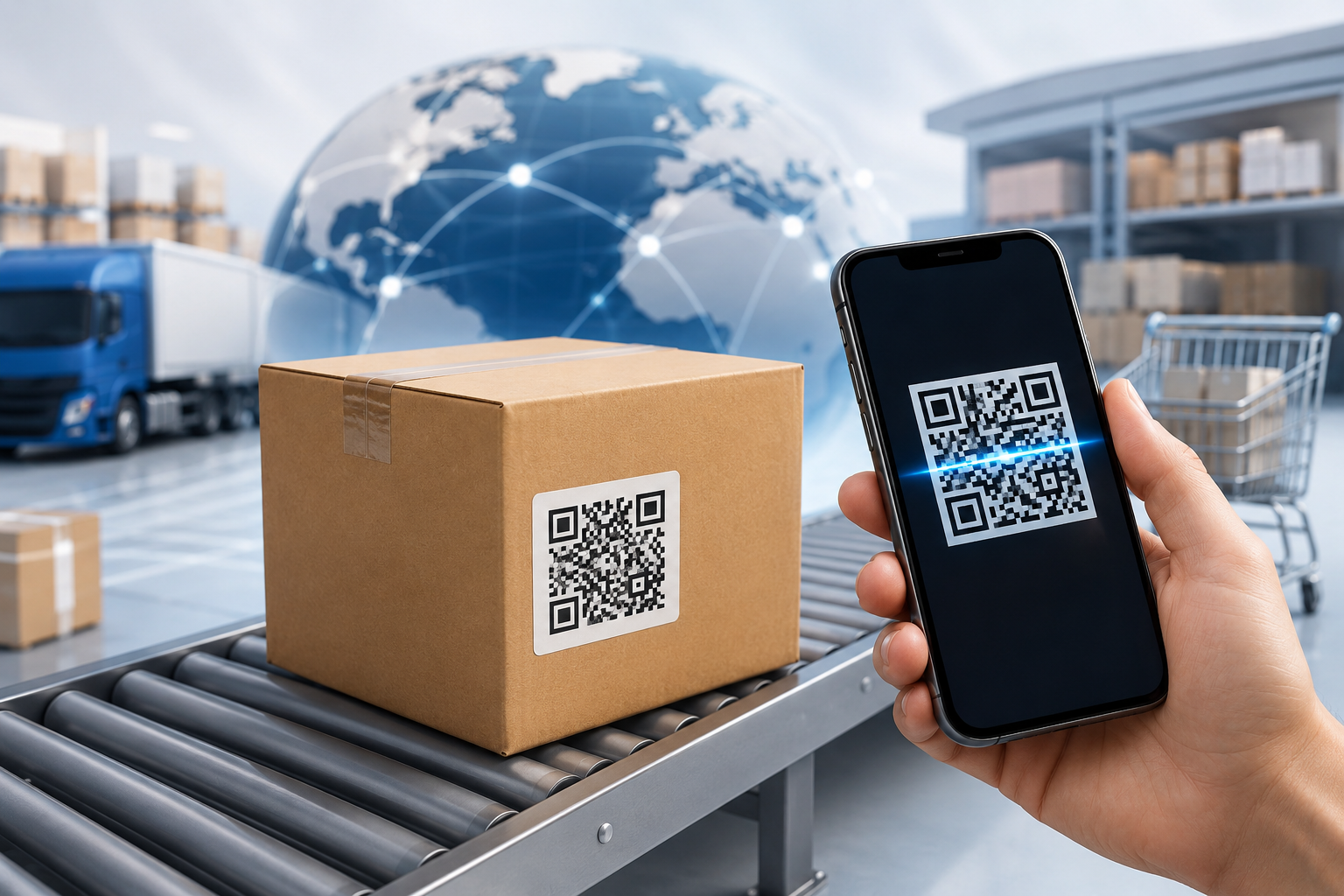
Digital product identification is becoming an integral part of global trade. Everybody – from manufacturers, transport companies, and retailers to consumers – expects fast and reliable information about the product at every step of its journey. A simple list of SKUs or barcodes will no longer suffice, as modern logistics networks require far more information. New standards allow the integration of identification, traceability, and digital services into a single system. One of the most interesting approaches is using GS1 QR Codes to link the product to its digital data.
For many years, linear barcodes have been widely used as the main product identification technique. This technique worked fine in a time when all the stores had to do was identify the product at the cash register and pass this information to the inventory management system.
However, today the market has changed due to the development of e-commerce, international logistics, and various digital services. Manufacturers now need to provide much more information than just one identification number. Products should be linked to instructions, certificates, information about the place of origin, special storage conditions, expiry dates, and other digital resources.
GS1 Digital Link solves this challenge, which operates on a web-based data architecture. Instead of providing only limited information, this system allows access to information stored on the Internet. One digital identifier helps all participants of the chain to access the necessary information.
Manufacturers can centralize product information, retail chains use a single identification format, and customers can access additional information through mobile devices.
Such an approach is especially relevant in the international business sphere, where a single product passes through dozens of companies before it reaches the consumer. One unified standard facilitates data exchange between producers, carriers, distribution centers, and retailers.
The use of GS1 QR Codes enables multiple functions in a single tool. A single digital object may contain links to information about the product, batch number, serial number, or other data tailored to various user types.
Legislative changes also influence the spread of such technologies. Numerous countries are tightening their requirements for product traceability, primarily in the food, pharmaceutical, and medical device industries. The use of international standards will simplify the process of adapting to new requirements and ensure compatibility across markets.
Another reason is the rising demand among consumers who want to know the product's origin, authenticity, and details about its composition and application. Modern digital tools make it possible to share this information without covering the packaging with numerous texts.
In practical terms, the standard becomes part of the company's unified digital ecosystem, connecting production, logistics, stock control, sales, and customer service.
Advantages of such an approach:
• application of the international identification standard;
• facilitation of the traceability of products;
• ease of integration with digital services;
• centralized information updating.
The use of up-to-date formats is important in anticipation of the development of global supply chains. With the increasing amount of digital information, the need for universal standards will become even more acute.
GS1 identifier creation starts with receiving the company prefix officially assigned to the organization. With this code, you can generate unique identifiers and ensure interoperability with the global system.
Once the company prefix has been assigned, your organization can assign GTINs to products. This type of identifier is the basis for digital recognition of any product and works across industries worldwide.
The next point is the selection of data accompanying the product. Some categories can be managed with simple identifiers, but others require special codes such as batch numbers, expiration dates, serial numbers, or other parameters.
This information can be represented as a structured URL using the GS1 Digital Link standard. In this way, different supply chain participants can receive the necessary information and avoid receiving unnecessary data during the process. When creating the identifier, consider how and where it will be used. There are different needs for logistics and warehouse management and for communication with end customers. Most companies use the same format for several types of usage.
The introduction process often involves integration with the company's information systems. The manufacturing platform, ERP, WMS, and inventory systems should interact properly with the new standard.
A lot of effort is put into providing high-quality print and positioning the digital elements on the package. They should be easily read by scanners during production, shipping, and sale.
As soon as products enter mass production, automation becomes an essential stage in the process. Special software enables the creation of many unique identifiers without manual input and minimizes mistakes.
Further quality checks are also essential for the manufacturers. Prior to product launch, experts test readability, compliance with GS1 standards, and the correctness of data exchange between systems.
The GS1 Digital Link standard was designed as an unified framework to bridge the gap between traditional product identification and new digital services. Its mission is not to become an alternative to the current procedures but to enrich the list of functions available to all parties involved in the supply chain.
This standard is based on the principle of using URLs that follow certain rules. The implementation of this solution means that product information can be handled by any company's IT systems, regardless of whether separate standards are created for each manufacturer or retail chain. The single digital ID will direct the user to different data sources based on their needs.
For instance, POS devices will receive the data necessary for the purchase transaction, warehouse systems will have access to information necessary for managing inventory, service centers will see warranty information, while the final customer will read information about product usage or the product's ingredients.
Interoperability plays a very important role. It is important to note that this international standard can be applied by any organization, regardless of its size – from small production companies to large corporations with thousands of product units. This system greatly facilitates integration with ERP systems, warehouse and logistics solutions, and retail software.
There is a focus on data longevity. Product information tends to change much more often than the packaging itself. There appears to be new information, new certificates, regulations, and other information that should be updated. When using Digital Link, there is no need to change anything in the packaging because the digital information can be updated.
This brings great advantages for manufacturers, as there will be no need to spend extra money on printing new packaging materials. It will be enough to update the information on the server.
One more area of implementation concerns the automation of quality control procedures. Production companies can verify the origin of certain batches, track their movements across several plants, and monitor item history. It becomes especially useful in industries with stringent requirements for the safety of goods. The possibilities for standard development depend directly on the digitalization of international commerce. Enterprises begin to move from simple identification number exchange to complete data exchange. Having a common format helps avoid incompatibility issues across various information systems.
Many countries are currently undertaking trade infrastructure development projects that consider GS1 Digital Link an essential component of future product identification systems. Companies can adapt to these changes in advance by gradually adopting new technology rather than making sudden changes.
The adoption of GS1 QR Codes is becoming an element of long-term development plans in the digital space. The companies get a unified tool for product information management that is always relevant, regardless of changes in product lines or entry into new markets.
The next stage involves integration with automated supply chain management systems, smart warehouses, and AI-based solutions will occur. With the gradual shift of processes to digital spaces, the relevance of unified international data exchange standards increases.
For businesses, this approach ensures more stable internal processes, reduces data processing errors, and increases supply chain transparency. The partners acquire a common language for data exchange, and customers receive reliable information about the goods they purchased quickly.
Adoption of new ID technologies should not be seen as a fleeting trend; it is part of the evolution of international trade relations, in which digital data is no less valuable than physical products. Companies that implement the innovation early gain additional time to adjust their internal practices and prevent potential difficulties in meeting market requirements.
As the popularity of GS1 Digital Link grows, more services will support this ID format. Manufacturing companies will be able to interact with retail chains, logistics companies, and digital platforms using a single international standard. Such a practice paves the way for further development of global supply chains, in which information exchange becomes an important competitive factor.
Ready to create your first QR code? Start free on ConnectQR - no credit card required.
Create dynamic QR codes with real-time analytics. No credit card required.
Start for Free →