
Create dynamic QR codes with real-time analytics. No credit card required.
Start for Free →Packaging has become an important communication channel between the brand and the customer.
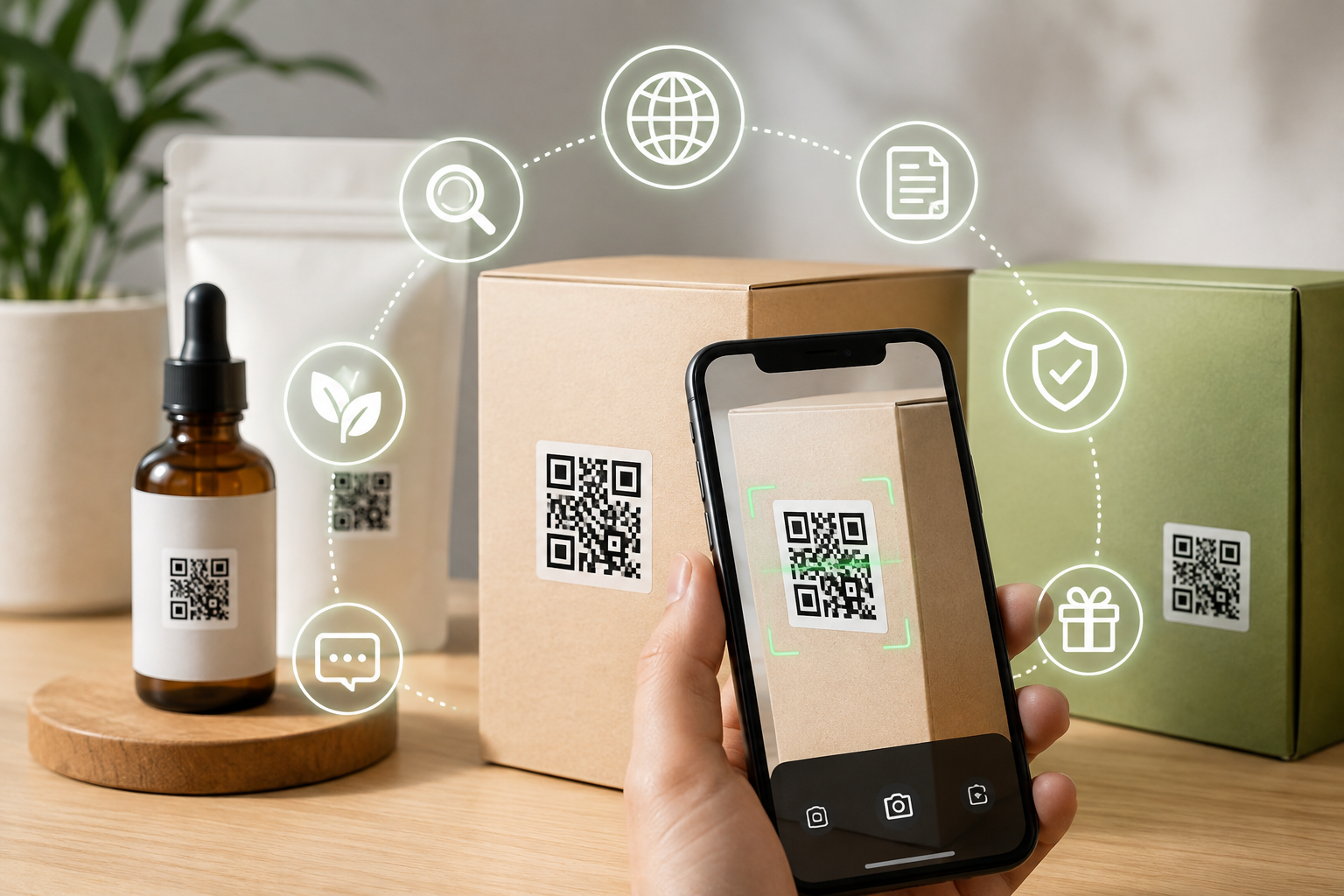
Packaging has become an important communication channel between the brand and the customer. Traditionally, packaging had just one function – protection of the item, along with providing essential information about the item, such as the name, contents, specifications, and instructions. Consumers today expect much more from the product packaging. In addition to knowing the product's origin, they desire detailed instructions and immediate access to additional content. With product QR code technology, packaging can become a source of information and a medium for engagement.
Decisions about purchases are made in just a couple of minutes. They are based on the packaging's appearance, the available information, and the level of trust in the brand. Corporations try to make the interaction between a customer and the packaging as meaningful as possible. However, there is always a problem related to the space limitations of a physical format.
It is impossible to fit all descriptions, certificates, instructions, recommendations, and additional materials into the box or on the packaging label. Digital technologies resolve this issue by providing an opportunity to publish the extended information online.
The QR code on the package allows the customer to access additional information about the purchase independently. They can learn more about the origin of the components, ways of use, or manufacturing, or access user guides, certifications, and additional product resources
The main benefit of using this technology is convenience. There is no need to visit the company's website, type the product name, and search for the relevant information across numerous pages. The user only needs to scan the QR code.
The application of Product QR Codes allows for establishing closer ties between the brand and its target audience. While consumers receive a sense of transparency, the company acquires another chance to highlight the value of its products.
The current packaging design evolves into a new format. It retains the aesthetics while becoming much more functional.
Such tools serve for different purposes including:
Consumers stay engaged even after the sale. The company may send messages, valuable content, or requests for feedback. In this way, the firm learns more about its customers and adjusts its products.
Such technology is especially important for firms working in a competitive market segment. As products may look quite similar, additional information may affect buyers' decisions. Transparency and convenience become a part of the brand's image.
Furthermore, digital packaging helps businesses keep a consistent tone in their communications. Rather than cramming the text onto the package, the firm can use an uncluttered design and provide the details on a web page.
Consumers expect instant access to information. Brands that suit this trend make it easier for consumers.
Modern manufacturing includes a number of stages – creation, production, storage, delivery, and sales. At each step, it is necessary to track the product's movement and collect data.
Digital labeling enables the collection of information about a product in a single system. Each unit of the product can be linked to specific data – the day of manufacture, batch specifics, and movement records.
Transparency becomes one of the most important elements of building trust. Consumers want to know exactly what they are buying, especially when it comes to food, cosmetics, health products, or expensive machinery.
It is possible to provide more information without changing the package design. The package remains compact, but all information is available in a digital form.
This solution is useful for different participants in the supply chain. Manufacturers are tracking production output, logistics partners are receiving tracking information, while consumers get confirmation of the product's authenticity and origin. This approach solves a number of tasks:
These options have become especially important for international companies. The more people who take part in the supply chain, the more difficult it becomes to ensure information reliability. One unified digital system will streamline communication and eliminate risks.
The problem of combating counterfeiting has become especially topical. There are a number of industries in which product counterfeiting is widespread. The ability to check a product's authenticity using a phone increases consumer trust.
Moreover, manufacturers gain additional insight into the process of market interaction. They can find out which products were checked most often, what materials interested customers, and what questions they had.
Information can be updated more quickly than with printed materials. If there is a need to change some details or instructions, or to post documents, everything can be done through the digital platform.
It is especially important for companies that frequently renew their product ranges. Nowadays, the production process is dynamic, and consumer demands are constantly changing. Digital packaging becomes part of the overall management strategy.
Generating labels for a wide range of goods demands precision and efficiency. If the company starts producing dozens or even hundreds of new items, it will take a lot of time to manually produce all the required elements.
QR code label generators allow you to automate this procedure. Specialized employees can make the required modifications in less time, use the prepared templates, and organize a large volume of information within a single system.
Automation is especially useful for companies that produce a great number of different goods. The introduction of new products, packaging changes, and seasonal collections demands rapid generation of digital assets.
Generators can minimize repetitive actions. People do not have to generate each item individually, check whether some elements are similar, or repeat the same action over and over.
It provides a number of benefits for companies. The preparation of packaging materials is being accelerated, and production costs are being reduced.
Modern technologies enable consideration of individual needs across various products. If it is small packaging, then one technology is required. A big box requires something else. Automated systems can adjust materials to specific conditions of use. Uniform quality control is important. If a company has many products, it should maintain consistent design standards and avoid technical errors.
It becomes possible to specify display parameters in advance, test the output, and prepare materials for printing or digital distribution.
This kind of tool becomes very handy in scaling a business. Whether you are entering new markets or launching a new product line, you can quickly build the necessary infrastructure.
The other aspect is the changing of market needs. Manufacturers often change packaging design, add new information, or adjust customer interactions. A flexible system enables a faster reaction to these changes.
Digital tools have become an integral part of the modern manufacturing process. It helps businesses work more efficiently and creates additional possibilities for consumers.
In the future, packaging development will be driven by the integration of physical and digital aspects. Products receive additional information, while customers get an easier way to communicate with the brand.
The use of QR codes changes the role of packaging, turning it from a mere information-storage tool into a means of communication, a tool for quality control, and a means of serving the customer.
Firms have the opportunity to tell the story of their products, verify their quality, and continue communicating with buyers even after the sale. For consumers, it means they become more informed and more assured about what they choose.
Another development in digital packaging is the personalization of customer interaction. Companies try to satisfy the needs of different consumer groups and create a more personalized experience for them. With QR codes linked to landing pages, brands can show information customized by location, type, or features specific to the target group.
For firms, it offers an opportunity to receive additional feedback from clients. People can give reviews, answer surveys, and share their opinions about the product.
The digital layer of package is increasingly becoming a core competitive advantage for packaging products. This is because there is an increase in added value from greater consumer information and greater brand involvement. In the crowded market, the quality of the interaction is the primary driver of repurchases and loyalty.
Firms implementing these technologies gain a means of building relationships with customers throughout the process, from the first contact to subsequent use.
There is no doubt that developments in this area will continue with the increasing demands for the quality of service and better customer about the customers.
Ready to create your first QR code? Start free on ConnectQR - no credit card required.
Create dynamic QR codes with real-time analytics. No credit card required.
Start for Free →