
Create dynamic QR codes with real-time analytics. No credit card required.
Start for Free →Modern customer journey usually involves more than one channel.
Modern customer journey usually involves more than one channel. One can look at the product in the store, research it online, check the price using their smartphone, and buy it online. The lines between physical stores and digital channels are increasingly blurred, and it is necessary to find ways to integrate these modes of interaction. Digital tools facilitate this process for both parties. QR technology plays an important element of this system since they enable the rapid integration of physical objects with online sources. For the merchants who use the Shopify platform, these technologies create a new scope of possibilities.
Retail changes because of new consumer behavior. Now people need more information, a comparison of various options, and an independent choice of the most comfortable mode of interaction with a brand.
Nowadays, a traditional store is no longer merely a place where you purchase something. It became the place to discover the product, speak with the staff, watch demonstrations, and switch to the digital environment. You can study the product's technical features, review additional information online, or order the product with delivery.
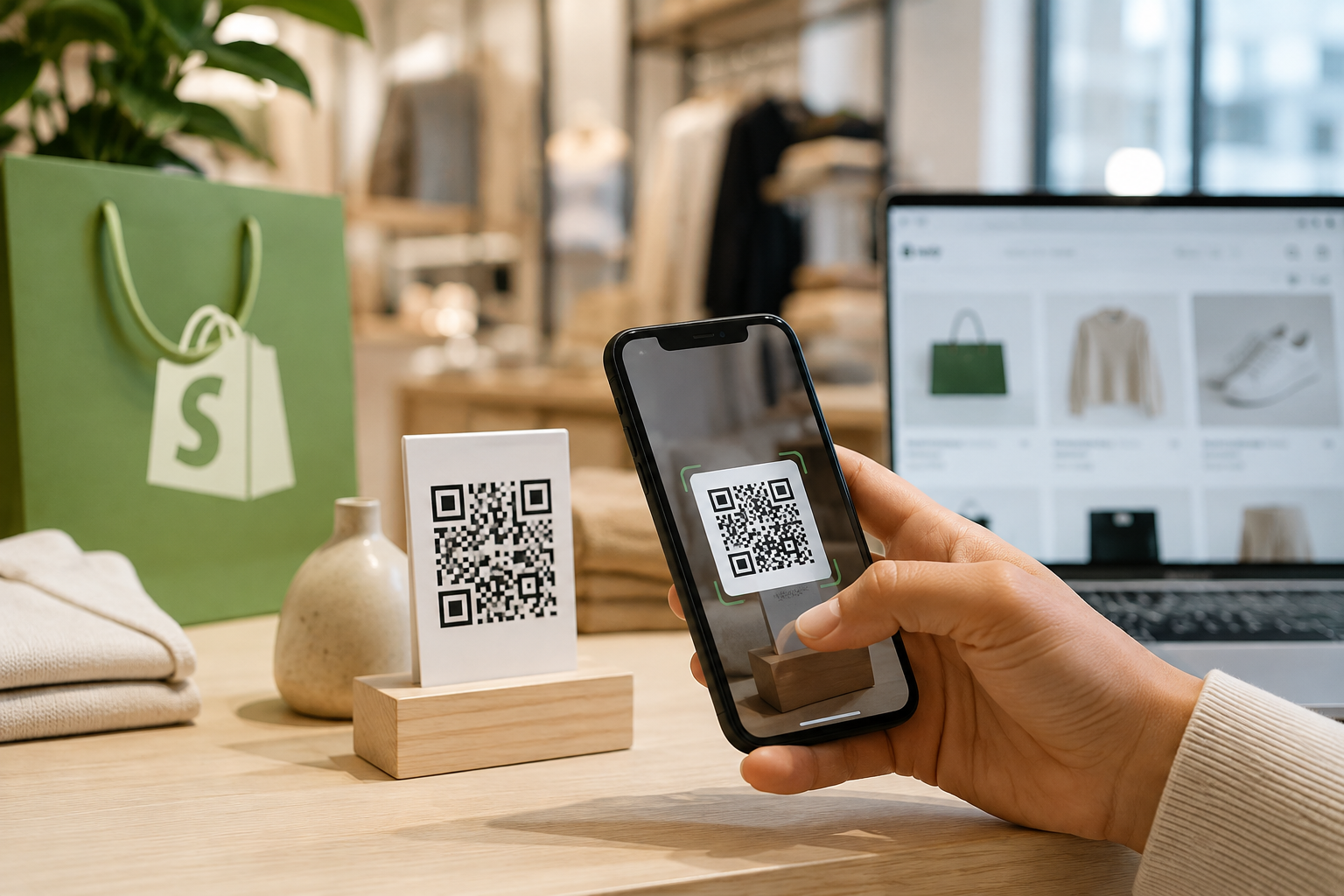
QR technologies allow connecting these processes. A small QR element that appears on the display, the label or advertising material, turns into the link between the real-world and the digital environment.
For the business owners, it becomes easier to communicate. Besides the limited information that could be put on the shelves, you can provide the visitors with additional information: video reviews, comments, advice on using the product, or similar goods.
This solution works particularly well for companies that have a wide range of goods. There is no way to display all the information about each product in the store, but in the digital environment, there is no limit to the amount of information that can be provided.
They are used in different situations:
Consumers appreciate convenience and fast results. If additional information is available immediately, the likelihood of brand engagement increases. Audience behavior is also analyzed. It provides valuable click-through data on customer interests, advertising effectiveness, and the ability to attract more clients through specific media channels.
This gives an opportunity to gain a better understanding of the consumer journey and make necessary changes to the product line, shop design, and marketing strategy.
One more factor is the development of mobile shopping. People use smartphones to search for information more often, which is why brick-and-mortar shops are trying to adapt to this trend. QR solutions make switching between offline and online shopping fast and simple.
It is also a good solution for small businesses. They can compete with larger brands without investing in complex digital infrastructure.
Shopify online stores actively use additional tools to boost sales efficiency. One popular solution is the Shopify QR code generator, which helps link products, promotional materials, and online store pages. This tool simplifies the creation of digital links and makes it easier for customers to interact with the product catalog.
When used effectively, such solutions help direct customers more quickly to the right products, promotions, and additional content.
It is particularly useful for retailers that operate both offline and online. The same product can be advertised across various channels, giving consumers an integrated experience throughout their shopping process.
The fast adaptation of advertising activities is another feature that retail owners appreciate. In the event of any changes to the promotion campaign, collections, or delivery methods, the page can be updated without changing all advertising materials.
The introduction of such technologies may be useful in improving several aspects of operation of the store:
The link between marketing and analytics is vital. Retail owners may analyze which offline materials bring visitors to the online store.
For instance, one may test different designs in different locations and see how they work. This will be useful for understanding which format suits certain people best.
Flexibility is especially relevant for Shopify stores. Product lines often change, and there are always some seasonal offers, new collections, and special offers. Tools that provide digital engagement tools help address these challenges.
Shoppers also benefit from more convenience. It does not require them to find a specific product by name or enter a long link. Just a few seconds are enough to reach any page and continue interacting with the brand.
It opens additional possibilities for customer retention. Companies may use various means after the first contact to make people visit their store again – such as subscriptions, recommendations, loyalty programs, or other personalized offers.
Digital tools become a natural part of the overall strategy for developing an online retail business. They try to simplify each step of the customer's journey, starting from the very first contact with a product.
Moreover, the retailers have implemented QR solutions in ways that go far beyond simply redirecting users to the website. These solutions allow the creation of interesting interaction scenarios and make the shopping process easier and more memorable.
Interactive storefronts are one of the popular choices here. The user can view the item in-store, get additional information about it, and proceed directly to checkout.
It is especially useful when discussing goods that require thorough inspection. Furniture items, electronic devices, and cosmetics usually fall under this category.
QR elements are also used to offer personalized discounts and bonuses to customers after their interaction with promotional materials.
Moreover, some really interesting options are available for the content. The store can provide its customers with such useful things as:
This makes it possible to make a more informed purchase decision. The customer gets more information about the product he chose.
Loyalty programs are another common use case. In lieu of plastic cards, firms provide a digital version, which is always available on a smartphone.
This technology can also be applied to organizing events and temporary sales. Thus, for example, at the time of the exhibition or presentation, visitors can view the catalog and place orders.
The creative use of the technology makes the store unique among its competitors. Regular advertising takes on another dimension, becoming part of the customer experience.
It is essential to take customers' preferences into consideration. Just putting the QR code doesn't mean success; the customer should be aware of the benefit he gets from scanning.
Integrating sales channels is one of the major difficulties of contemporary retailing. Customers do not differentiate between the brick-and-mortar shop and the webshop as much as the companies themselves do; for them, what matters is receiving good service regardless of the channel they choose.
The QR technology allows for merging the two spaces – the physical shop and the webshop. A client may start shopping in the store, continue in the webshop, and purchase the item via their preferred method.
This type of retailing is called "omnichannel" retailing. The omnichannel system provides an opportunity for companies to establish more flexible relations with their clients.
For instance, a customer may see an item in the store but buy it online because the required size or color is unavailable. Some clients may learn about the offer in an advertisement and go to the store to see the item in person. Digital links make these transitions seamless.
For business owners, channel integration will give a complete picture of the customer segment. They will be able to identify which channels work better, which products people pay more attention to, and which offers help make a sale.
The future of retail commerce consists of hybrids. In this model, the store becomes a large-scale digital ecosystem where everything works together to help the customer make faster decisions.
It is important because QR technology will be an integral part of the future digital ecosystem due to its ease of use and accessibility. This technology is suitable for companies of any size and helps develop digital infrastructure step by step.
With Shopify stores, sales become more flexible and effective for both business owners and buyers.
Such interactions are slowly becoming an integral component of retailing. Companies that integrate both physical and virtual channels open up new possibilities for growth and relationship-building with their target audience.
Ready to create your first QR code? Start free on ConnectQR - no credit card required.
Create dynamic QR codes with real-time analytics. No credit card required.
Start for Free →