
Create dynamic QR codes with real-time analytics. No credit card required.
Start for Free →Modern supply chains, retail systems, logistics operations, and e-commerce platforms rely heavily on standardized product identification.
Modern supply chains, retail systems, logistics operations, and e-commerce platforms rely heavily on standardized product identification. Businesses across industries use barcode systems to improve inventory management, increase operational efficiency, simplify product tracking, and support global commerce. One of the most widely recognized standards is the gs1 barcode, which helps businesses create globally standardized product identification systems for retail, logistics, healthcare, manufacturing, and digital commerce.
GS1 standards are used by millions of businesses worldwide because they improve product visibility, interoperability, and data consistency across supply chains. As global commerce becomes increasingly digital and interconnected, GS1 barcodes continue playing a critical role in inventory management, retail operations, and product authentication.
A GS1 barcode is a globally standardized barcode format developed by GS1, an international organization responsible for creating universal product identification standards.
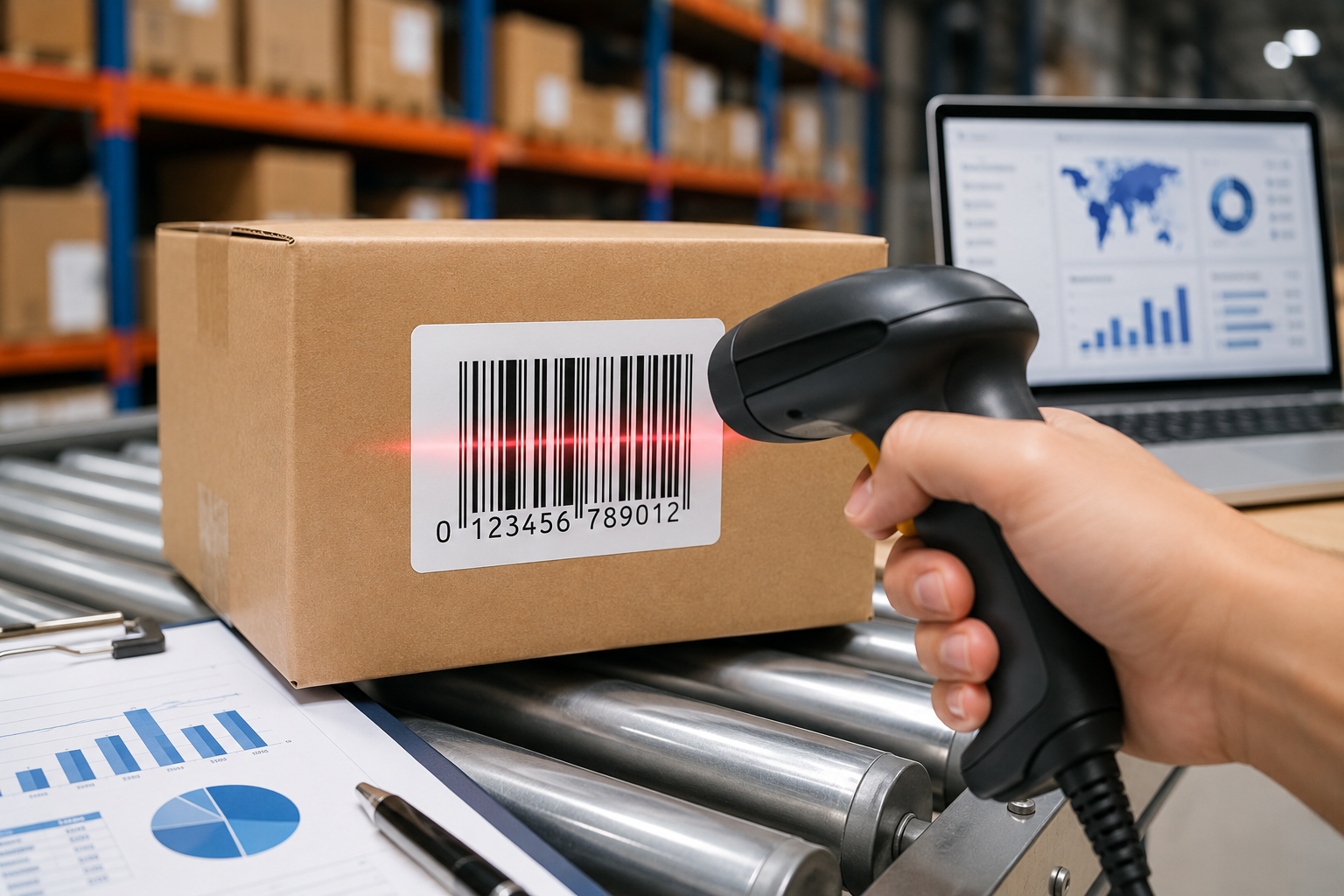
GS1 barcodes store product information in a machine-readable format that can be scanned using barcode scanners, mobile devices, or POS systems.
Businesses use GS1 barcodes to:
GS1 standards ensure that products can be recognized consistently across different retailers, marketplaces, warehouses, and distribution systems.
Without standardized barcode systems, businesses would struggle with:
GS1 standards solve these problems by creating a universal identification framework used globally.
This allows:
to exchange product information efficiently and accurately.
GS1 supports several barcode formats depending on industry needs and product requirements.
Common GS1 barcode formats include:
Different barcode formats are designed for:
GS1 barcodes contain structured product data encoded into scannable symbols.
The barcode typically includes:
When scanned, the system instantly retrieves product data from inventory or retail databases.
This simplifies:
Many businesses search for how to get a gs1 barcode when launching products or entering retail distribution channels.
The process typically involves several steps.
Businesses first need to register with their local GS1 organization.
Registration provides access to:
The company prefix becomes part of the product identification structure.
After registration, businesses receive GTINs (Global Trade Item Numbers).
GTINs uniquely identify individual products and product variations.
Different product sizes, colors, or packaging formats usually require separate GTINs.
Once GTINs are assigned, businesses can generate GS1-compliant barcodes using approved barcode software or platforms.
The barcode must follow GS1 formatting standards to ensure:
After generation, the barcode is added to:
Proper placement and sizing are essential for scan reliability.
Before mass distribution, businesses should verify:
Poor barcode quality can create supply chain and checkout issues.
Businesses often ask how to use gs1 barcode systems effectively across retail, logistics, and inventory operations.
GS1 barcodes support multiple operational functions.
Retailers scan GS1 barcodes at checkout to:
This reduces manual entry errors significantly.
Warehouses and retailers use GS1 barcodes for:
Barcode scanning improves inventory accuracy and operational efficiency.
GS1 standards improve product visibility across supply chains.
Businesses can track:
This improves logistics coordination and transparency.
Many businesses use GS1 standards to improve product authenticity verification.
This is especially important for:
Unique product identifiers help reduce counterfeit risks.
Online marketplaces increasingly require GS1-compliant identifiers.
Platforms such as:
often rely on GTIN systems for product catalog management.
GS1 compliance improves:
Businesses increasingly explore the benefits of gs1 barcode for businesses because standardized product identification provides major operational advantages.
Barcode scanning significantly reduces manual inventory errors.
Businesses can:
This improves operational reliability.
GS1 barcodes improve:
Customers benefit from faster shopping experiences.
GS1 standards create more transparent supply chains.
Businesses can track products across:
This improves operational coordination and reduces inefficiencies.
GS1 barcodes are recognized internationally.
This allows businesses to:
Global standardization simplifies international commerce.
Manual product tracking increases the risk of:
Barcode scanning automates product identification and improves accuracy.
Traceability is increasingly important across multiple industries.
GS1 systems help businesses track:
This improves quality control and compliance.
Consumers increasingly value transparency and authenticity.
GS1 systems support:
This improves brand credibility and customer confidence.
Businesses often compare gs1 barcode vs traditional barcode systems when choosing identification solutions.
Although both systems support product scanning, GS1 standards provide greater scalability and interoperability.
Traditional barcodes may not follow global identification standards.
GS1 barcodes use internationally recognized structures that improve compatibility across:
Some traditional barcode systems store limited product information.
GS1 standards can support:
This improves operational functionality.
GS1 systems are accepted globally across major industries and marketplaces.
Traditional barcodes may face compatibility limitations depending on retailer or system requirements.
GS1 standards are specifically designed for large-scale supply chain coordination.
Traditional barcode systems may lack:
Many online marketplaces prefer or require GS1-compliant identifiers for product listings.
GS1 compliance helps businesses:
GS1 standards continue evolving alongside digital commerce and mobile technology.
GS1 Digital Link combines traditional product identification with modern QR functionality.
This allows businesses to provide:
through a single scannable QR code.
Consumers can scan the code using smartphones instead of specialized barcode scanners.
GS1 standards are used across many industries worldwide.
Retailers use GS1 systems for:
Healthcare organizations use GS1 standards for:
Logistics providers rely on GS1 systems for:
Manufacturers use GS1 barcodes for:
Online marketplaces use GS1 standards to improve:
Although GS1 systems are highly effective, implementation mistakes can still create operational issues.
Improper barcode dimensions may reduce scan reliability.
Businesses should follow GS1 sizing guidelines carefully.
Low-resolution printing can create:
High-quality printing is essential.
Some businesses purchase unofficial barcode numbers from third-party sellers.
This can create:
Businesses should always obtain barcodes directly through official GS1 organizations.
Barcodes should remain:
Poor placement reduces operational efficiency.
GS1 standards continue evolving as commerce becomes increasingly digital and interconnected.
Future developments include:
As businesses continue prioritizing automation, transparency, and digital transformation, GS1 barcode systems will remain a critical part of global commerce infrastructure.
Ready to create your first QR code? Start free on ConnectQR - no credit card required.
Create dynamic QR codes with real-time analytics. No credit card required.
Start for Free →